




An orangery conservatory supplier should do more than sell you a glazed room. The right installer should help you decide whether an orangery conservatory is the right fit for your home, your budget, and the way you want to use the space.
An orangery conservatory gives homeowners a balance of natural light, structure, comfort, and flexibility. It is a strong option for Milton Keynes homeowners who want a bright glazed extension that feels more solid and room-like.
At Globe Home Improvements, we supply and install bespoke conservatories, orangeries, doors, windows, and glazed extensions for homeowners across Bedfordshire, Hertfordshire, Buckinghamshire, North London, and surrounding areas, including Milton Keynes. If you are comparing local options, our team can guide you through the design choices and provide a free, no-obligation quote before you commit.
What Is an Orangery Conservatory?
An orangery conservatory is a conservatory with design details inspired by traditional orangeries. Instead of being defined by one fixed structure, it can be shaped around the look and feel you want for your home.
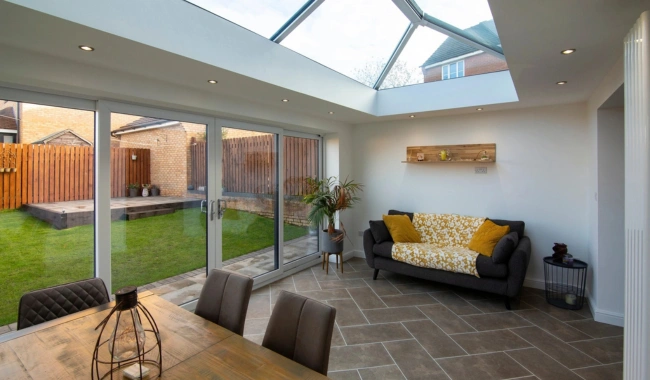
For some properties, that may mean partial brickwork, brick pillars, a roof lantern, or a more substantial roof design. For others, it may mean a lighter glazed layout with uPVC or aluminium frames, French doors, sliding doors, or bifold doors leading out to the garden.
This flexibility is what makes the style so useful. The design can be planned around how you want to use the room, whether that is as a dining area, lounge, home office, playroom, garden room, or kitchen-linked living space. The aim is to create a bright extension that still feels comfortable, practical, and connected to the rest of the home.
If you are still weighing up whether this style of project makes sense, our guide to the benefits of adding an orangery is a useful next read.
What Makes an Orangery Conservatory Different?
An orangery conservatory is a conservatory with extra design details inspired by traditional orangeries. The difference is less about comparing it with a standard conservatory and more about understanding what those details can add to the finished room.
Key features can include:
- A more room-like feel: Orangery-inspired details can make the space feel more connected to the home, rather than like a separate glazed add-on
- More structure: Partial brickwork, brick pillars, stronger framing, or insulated roof sections can give the extension a more substantial appearance
- Plenty of natural light: Roof lanterns, roof glazing, glazed doors, and well-placed windows help keep the room bright without relying on an all-glass design
- Better comfort potential: Energy-efficient glass, insulated roofing, ventilation, and careful roof design can all help with warmth in winter and temperature control in summer
- Flexible styling: uPVC or aluminium frames, door styles, brickwork, roof options, and internal finishes can be chosen to suit the property
- A tailored layout: The design can be planned around how the room will be used, whether that is as a dining area, lounge, home office, playroom, garden room, or kitchen-linked space
This is where a professional orangery conservatory installer matters. The right specification depends on your home, the direction it faces, how much glazing you want, the roof system, ventilation, frame choice, and how the new space connects to the existing property. We have a guide explaining why good planning and installation make such a difference.
Why This Orangery Conservatory Option Suits Milton Keynes Homes
Milton Keynes homes vary widely, from modern estates and family houses to older properties in nearby Buckinghamshire villages. That range is one reason an orangery conservatory works so well: the design can be adapted to different architectural styles without forcing every home into the same template.
For newer homes, aluminium frames, bifold doors, and a clean roof lantern can create a sharp, garden-facing living space. For more traditional properties, uPVC frames, brick pillars, and warmer finishes can help the extension feel established and in keeping with the house.
It is also a practical choice for family homes. An orangery conservatory can be used as a dining area, a playroom that stays connected to the garden, a calm home office, or a brighter lounge.
If your existing conservatory is uncomfortable or dated, an upgrade may be worth exploring. Our guide to conservatory upgrades covers common ways to improve older rooms before deciding whether a new build or replacement is the better route.
Orangery vs Conservatory: What’s the Difference?
Orangeries and conservatories are closely related, but they usually create a slightly different look and feel. A conservatory is often thought of as a lighter glazed extension, while an orangery usually has more solid construction, more brickwork, and a stronger room-like feel.
An orangery conservatory sits between the two. It can offer the brightness people expect from a conservatory, while borrowing orangery-inspired features such as brick pillars, a roof lantern, or a more substantial roof design.
| Feature | Orangery | Conservatory |
|---|---|---|
| Overall feel | More solid, structured, and room-like | Lighter, brighter, and more glass-led |
| Typical construction | Often includes more brickwork, pillars, or a substantial roof design | Usually uses more glazed walls and a lighter frame structure |
| Roof style | Often includes a roof lantern, flat roof sections, or insulated elements | Often uses a glass, polycarbonate, tiled, or warm roof system |
| Natural light | Bright, but usually balanced with more solid structure | Very bright, especially with larger glazed areas |
| Best suited to | Dining rooms, kitchen-linked spaces, lounges, and extensions that should feel integrated with the house | Garden rooms, lounges, playrooms, and bright spaces with strong garden views |
| Design flexibility | Can feel more like a permanent extension when planned carefully | Can be simpler, lighter, and more cost-flexible depending on the design |
| Planning considerations | Treated as a home extension for planning purposes | Also treated as a home extension for planning purposes |
Neither option is automatically better. The right choice depends on your property, budget, preferred style, and how you want to use the space. If you want maximum glazing and a garden-facing feel, a conservatory may suit you well. If you want a brighter extension that feels more like part of the main house, an orangery or orangery conservatory may be the better fit.
Do You Need Planning Permission for an Orangery In Milton Keynes?
You may not always need planning permission for an orangery in Milton Keynes, but it depends on the property and the design. Orangeries and conservatories are generally treated under the same planning rules as other house extensions. Some projects can fall under permitted development, while others require a householder planning application.
Permitted development rights allow certain home extensions to be built without a full planning application, as long as the project meets the relevant limits and conditions. If the proposed orangery goes beyond those limits, planning permission is likely to be needed. The Planning Portal also advises homeowners to contact their Local Planning Authority if they are unsure before work starts.
The main points to check include:
- Size: The overall size of the orangery matters. Larger extensions are more likely to need planning permission, and the rules consider the proposed extension alongside any previous extensions to the property.
- Height: The height of the roof, eaves, and any lantern or raised roof feature can affect whether the project stays within permitted development limits.
- Position: Where the orangery sits on the property is important. Rear, side, and front-facing extensions can be treated differently, and extensions closer to boundaries may have tighter limits.
- Previous extensions: Permitted development rules consider the total enlargement of the original house. If the property has already been extended, that previous work may reduce what can be added without planning permission.
- Listed buildings: Listed buildings usually need extra care and may require listed building consent as well as planning approval. Always check before making changes to a listed property.
- Conservation areas: Homes in conservation areas or other restricted areas may have reduced permitted development rights. Some locations may also be affected by planning conditions or Article 4 Directions.
- Building regulations: Planning permission and building regulations are separate. Even if planning permission is not needed, the work may still need to comply with building regulations.
- Opening between the house and extension: If a new structural opening is created between the existing house and the orangery or conservatory, building regulations approval is required, even where the conservatory itself may otherwise be exempt.
Building regulations usually apply to home extensions. Conservatories can sometimes be exempt when they are ground level, single storey, under 30 square metres, separated from the house by external-quality walls, doors, or windows, and have an independent heating system with separate controls. Glazing and electrical work still need to comply with the relevant requirements.
Because every property is different, the safest route is to check the project before work begins. A professional installer can help you understand the design, but the final planning position should be confirmed with the relevant local authority or through formal planning advice where needed.
Can an Orangery Conservatory Be Used All Year Round?
Yes, an orangery conservatory can be designed for year-round use, but it depends on the specification. Roof design, glazing, insulation, ventilation, and installation quality all matter, especially if the project needs to meet building regulations for glazed extensions.
Older conservatories often struggle because heat escapes through poor roofing and outdated glass. A modern build can improve comfort with double glazing, energy-efficient glass, insulated roof sections, a warm roof, or a solid roof element. The aim is to reduce heat loss in winter and limit overheating in summer.
Roof choice makes a big difference, too. Some homeowners prefer a glass roof for maximum light, while others choose a roof lantern with insulated areas around it. Others opt for a warm roof where comfort matters more than full overhead glazing. If you are comparing options, our conservatory warm roof guide and our advice on roof lanterns for extensions are good places to start.
A reliable orangery conservatory installer in Milton Keynes should be able to explain those trade-offs, rather than pushing one roof system for every home.
Modern Orangery Conservatory Ideas for Family Homes
The best modern orangery conservatory ideas start with how you plan to use the space. A family dining area needs different lighting, doors, and flooring than a quiet home office. A garden-facing lounge may need more shading and ventilation than a playroom used mainly after school.
Here are a few design routes that work well:
- Light-filled dining room: Glazed walls, French doors or bifold doors, and a roof lantern to keep the room bright
- Garden room: Sliding doors, strong garden access, and a layout that keeps the outside view central
- Home office: Better insulation, controlled glazing, and enough wall space for storage or screens
- Kitchen extension: Partial brickwork, roof lights, and careful planning around heating, lighting, and ventilation
- Replacement conservatory: A more insulated roof, better glazing, and a design that feels more connected to the rest of the house
If you want a brighter room without sacrificing comfort, an orangery conservatory is often the right option to explore. A site survey will confirm what is possible and what needs careful planning.
Why Choose Globe Home Improvements for Your Orangery Conservatory In Milton Keynes?
Choosing an orangery conservatory supplier and installer means trusting one company with the design, product quality, installation, and aftercare. That is why experience matters.
Globe Home Improvements is a family-run home improvement company founded in 2004, with over three decades of industry experience. We supply and install high-quality PVC-U and aluminium windows, doors, conservatories, orangeries, roof systems, and related home improvements across Bedfordshire, Hertfordshire, Buckinghamshire, North London, and surrounding areas.
Here is what homeowners can expect from us.
1. Design Guidance Before You Decide
We start by understanding how you want to use the space. Do you need more dining room? A brighter lounge? A playroom? A year-round garden room? Once we know your goal, we can help you choose the right orangery conservatory specification, from glazing and doors to roof design, brickwork, ventilation, and finishing details.
2. Supply and Installation From One Team
Working with one orangery conservatory supplier and installer keeps the process clear. We can advise on the design, supply the right products, and install the extension properly, so you do not have to coordinate multiple companies to get the job done.
3. Quality Frames, Glazing, and Roof Options
We offer uPVC and aluminium options, energy-efficient glass, a range of door styles, conservatory roofs, lantern roof lights, and other finishes. If you are considering lanterns specifically, our guide to lantern roof lights explains how they can bring overhead light into a more structured extension.
4. Guarantees and Aftercare
Every product we install comes with our 10-year Globe Home Improvements Warranty. We are also FENSA registered, and applicable installations are covered by Home Improvement Protection, which provides an additional 10-year insurance-backed guarantee.
5. Local Knowledge Around Milton Keynes Homes
A local installer understands the homes, property styles, and practical expectations in the area. If you are searching for an orangery conservatory installer in Milton Keynes, we can visit, assess your property, and recommend a design that suits your home rather than forcing a standard package.
How to Choose an Orangery Conservatory Installer
A good orangery conservatory installer will be clear about the process before work begins. You should expect a proper design consultation, a site survey, practical advice, and a detailed written quote explaining what is included.
Look for these signs:
- They clearly explain which orangery conservatory features suit your conservatory design
- They ask how you plan to use the room before recommending a design
- They discuss roof options, glazing, insulation, ventilation, and doors
- They are clear about planning permission and building regulations
- They offer product guarantees, workmanship standards, and aftercare
- They can show relevant experience with conservatories, orangeries, and glazed extensions
Be cautious of any company that gives a price before understanding the specifics of your property. An orangery conservatory is not a one-size-fits-all job. Even a lighter design needs careful planning to ensure it feels comfortable, safe, and properly finished. Projects that alter the opening between the house and the extension may also require building control approval.
Is an Orangery Conservatory Worth It?
An orangery conservatory is worth considering if you want a bright, usable extension with more structure, comfort, and design detail than a very simple glazed room. It offers a flexible balance of natural light, usable space, and orangery-inspired styling.
The value comes from daily use. If the room becomes the place where the family eats, relaxes, works, or enjoys the garden view, it quickly proves its worth. This design also gives you more control than an off-the-shelf conservatory, which can be especially helpful if your home has a particular style or layout.
Cost depends on the size, materials, roof choice, glazing, doors, groundwork, and finish. A tailored quote is the most reliable way to judge what it will cost for your home. If you want to compare options, you can request a free quote and talk through the best route with our team.
Our Full Range of Conservatory Styles
While orangery conservatories are a strong option for homeowners who want a brighter glazed extension with more structure and design detail, Globe Home Improvements also supplies and installs a full range of conservatory styles:
- Gable Ended Conservatories – A great choice for height, light, and a more open roofline
- Lean-To Conservatories – A practical option for smaller homes or simpler layouts
- Victorian Conservatories – A classic style with a softer, more traditional shape
- Edwardian Conservatories – A square or rectangular layout that makes furniture placement easier
- P-Shape and T-Shape Conservatories – Ideal for larger homes and multi-use rooms
If you are unsure which style suits your home, that is exactly what the design consultation is for. A trusted orangery conservatory supplier should help you compare your options clearly, without rushing you into the most expensive choice.
FAQs About Orangery Conservatories In Milton Keynes
Is an orangery conservatory the same as an orangery?
No. An orangery conservatory is a conservatory design with orangery-inspired features, such as partial brickwork, stronger structure, or a roof lantern. It gives homeowners an orangery look and feel without necessarily building a full traditional orangery.
Why choose an orangery conservatory?
Choose an orangery conservatory if you want a bright glazed extension with more structure, better comfort, and a more considered room-like finish. It can be tailored around your property, roof choice, glazing, doors, and how you plan to use the space.
Does an orangery conservatory need planning permission?
Some orangery conservatories may fall under permitted development, while others may need planning permission depending on the size, location, height, and the specific property. The safest approach is to check before work begins, especially if the home is listed, in a conservation area, or has already been extended. UK homeowners can review Permitted Development rules before speaking to an installer.
What can I use an orangery conservatory for?
You can use an orangery conservatory as a dining room, lounge, home office, playroom, garden room, or kitchen-linked extension. The best option depends on your roof choice, glazing, heating, ventilation, door placement, and how the space connects to the rest of your home.
What should I look for in an orangery conservatory installer?
Choose an orangery conservatory installer with proven experience, clear design advice, thorough site surveys, strong product options, and dependable guarantees. They should clearly explain the supply-and-install process, planning requirements, building regulations, thermal performance, and aftercare before you commit.
Speak to Us About Orangery Conservatory Installation
If you want more light, more space, and a room with orangery-inspired style, an orangery conservatory may be the right fit.
At Globe Home Improvements, we can help you compare designs, choose suitable frames, glazing, doors, and roof options, and plan an installation that suits your property. Speak to our team for practical advice and a tailored quote.
To discuss your project, request a free quote, and we will help you choose the right next step.