




Edwardian Conservatories are often the practical choice for Bedford homeowners who want more usable floor space without losing period character. Victorian conservatories still have a strong place, especially on homes where softer detailing, a rounded bay, and a more decorative roofline suit the property better.
That is the real decision. It is less about which style is “best” and more about which shape will work with your home, your garden, and the way you want to use the room.
At Globe Home Improvements, we design, supply, and install PVC-U and aluminium windows, doors, and conservatories across Bedfordshire, Hertfordshire, Buckinghamshire, and North London. When we compare Victorian and Edwardian designs with customers, we usually start with three questions: what does the existing property look like, how much practical space is needed, and how much visual detail feels right?
The Main Difference Is Shape, Not Just Style
A Victorian conservatory usually has a rounded or faceted front, often with a bay shape and a more ornate roof. It feels decorative, traditional, and slightly softer from the garden. That is why it often suits older homes, cottages, and properties with existing period details.
An Edwardian conservatory is more rectangular or square. The roof still gives it height and character, but the footprint is simpler. That makes the room easier to furnish, easier to plan, and often more efficient if you want the conservatory to work as a dining area, sitting room, playroom, or everyday extension of the home.
If you are already comparing styles, it helps to look at the broader conservatory options first, then narrow the choice by property type and room use.
The mistake is choosing from the outside only. A conservatory has to look right from the garden, but you will live with it from the inside.
Suggested read: Summer Home Improvements That Add Value Before Autumn
Why Victorian Conservatories Still Suit Bedford Homes
Victorian conservatories have a more decorative look. The angled bay, pitched roof, and traditional detailing can soften the back of a property, especially where a plain rectangular structure would feel too boxy.
They also suit homes where the conservatory is intended to feel like a garden room rather than a standard extension. The faceted front can create lovely views across the garden, and the shape works well when the room is used for relaxed seating, plants, reading, or occasional dining.
There is some genuine history behind the style too. Victorian conservatories became highly fashionable in the nineteenth century, helped by Britain’s wider enthusiasm for glasshouses, exotic planting, and the popularity of large glazed structures after the Great Exhibition of 1851. These spaces were often attached to drawing rooms and used as attractive rooms for plants, recreation, and entertaining, which is why the phrase Victorian conservatory history still fits the style so well.
That history matters because the modern Victorian style still carries the same visual idea: light, decoration, and a stronger connection with the garden.
The trade-off is furniture. Angled fronts can make layout planning slightly less straightforward. A table, sofa, or storage unit may fit better in a square or rectangular room. We normally recommend sketching the furniture plan before committing to the style, because a beautiful conservatory that cannot comfortably hold the furniture you want will frustrate you later.
If the bay shape suits your home and you want a softer traditional finish, our Victorian conservatories are built around that classic appearance while using modern materials and glazing.
Why Edwardian Conservatories Are Often More Practical
Edwardian conservatories tend to win when the brief is simple: give us a bright, usable room with as little wasted space as possible.
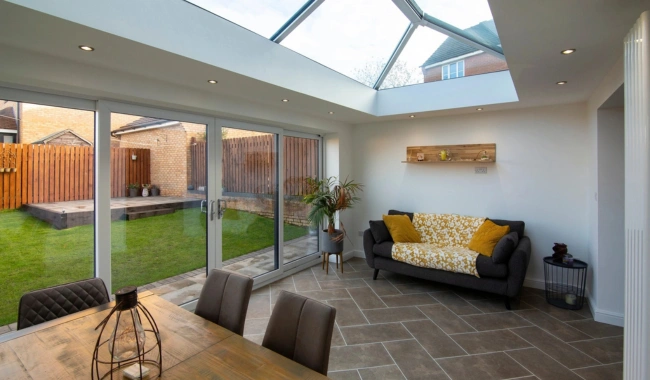
The square or rectangular footprint makes a noticeable difference. You can place a dining table centrally, run furniture neatly along the walls, add storage, or create a more open family space. For many Bedford homes, especially semi-detached and detached properties with a fairly straight rear elevation, that clean shape feels natural.
The roof still gives the room height and presence. It does not feel flat or plain. It just avoids the extra angles that can make Victorian layouts harder to use.
We often find Edwardian designs work well for customers who want the conservatory to become part of everyday life rather than a room used now and then. If the space needs to handle family meals, children’s toys, working from home, or regular guests, the simpler footprint usually makes life easier.
Our Edwardian conservatories are a strong fit where the customer wants traditional character but does not want to sacrifice practical internal space.
Match The Conservatory To The Property First
A conservatory should feel like it belongs to the house. That does not mean it has to copy every detail, but the proportions, roofline, colour, and material choices need to sit comfortably with what is already there.
For a more decorative or older-looking Bedford property, a Victorian design may echo existing detail more naturally. If the house has bay windows, softer brickwork, or period-style features, the faceted front can feel sympathetic rather than added on.
For a newer or more symmetrical property, an Edwardian design can look cleaner. The simple footprint often lines up better with modern patio doors, straight garden elevations, and more minimal landscaping.
A good design process should check:
- The width and depth available in the garden
- How the roofline meets the existing house
- Whether the doors should open centrally or to one side
- How much wall space is needed for furniture
- Whether the room needs to feel traditional, modern, or somewhere between the two
That last point is where many decisions become clearer. If you want charm and a garden-room feel, Victorian may be right. If you want a balanced room that is easy to use every day, Edwardian often has the edge.
Think About Light, Heat, And Everyday Comfort
Style matters, but comfort decides whether the conservatory gets used.
A south-facing conservatory in Bedford will behave differently from one that gets softer morning or evening light. The amount of glazing, roof specification, ventilation, and door placement all affect how the room feels through the year.
This is where modern conservatory design has moved on from the older image of conservatories being too hot in summer and too cold in winter. The right glazing, roof choices, frames, and ventilation can make the space far more usable. Still, the design needs to be honest about the site.
Before we recommend a style, we look at how the sun hits the property, what the room will be used for, and how open the garden aspect is. A room used for occasional seating has different comfort demands from a dining area or work-from-home space.
Victorian and Edwardian conservatories can both perform well, but the specification has to support the way the room will be used. Shape alone will not solve comfort issues.
Suggested read: Is Your Conservatory Too Hot in Summer? How a Warm Roof Can Help
Which One Adds More Value?
There is no sensible way to say that one style always adds more value than the other. A well-designed conservatory that suits the house, gives useful space, and feels properly finished is more likely to support the property than a style chosen because it looked impressive in isolation.
For many buyers, practical usable space matters. That can favour Edwardian conservatories because the square footprint is easier to understand and furnish. For a period-style home, though, a sympathetic Victorian conservatory may feel more appropriate and more attractive.
Our view is fairly blunt: the conservatory that adds the most value is the one that looks intentional. It should not feel squeezed onto the back of the house, awkwardly proportioned, or disconnected from the rest of the property.
If resale value is part of your thinking, prioritise proportion, build quality, comfort, and a layout that future owners can use without needing to rethink the room.
Suggested read: Lantern Roof Lights vs Flat Roof Lights: Which Is Best for Your Home?
FAQ
Are Victorian conservatories more expensive than Edwardian conservatories?
Not automatically. Cost depends on size, materials, glazing, roof specification, access, and installation requirements. A smaller Victorian conservatory may cost less than a larger Edwardian one, so it is better to compare designs like for like.
Which conservatory style is better for a small garden?
Edwardian conservatories often work better in smaller gardens because the square or rectangular footprint uses space efficiently. A Victorian design can still work well if the bay front improves the look of the property without taking up too much depth.
Do Edwardian conservatories look too plain?
They can look plain if the specification is too basic or the proportions are wrong. With the right roofline, frame colour, glazing, and finishing details, an Edwardian conservatory can look elegant rather than simple.
Can a Victorian conservatory work on a modern home?
Yes, but it needs careful design. On some modern homes the decorative shape can create a useful contrast, while on others it can look forced. The safest approach is to match the scale, frame finish, and roof style to the existing property.
Choosing between Victorian and Edwardian conservatories is really a choice between character and usable shape. Victorian designs bring softer detail and a stronger garden-room feel. Edwardian designs give you a cleaner footprint and usually make day-to-day furnishing easier.
Speak To Us About Conservatories In Bedford
If you are planning a conservatory and are not sure which style suits your Bedford property, it is worth getting advice before settling on the shape.
At Globe Home Improvements, we can talk through Victorian and Edwardian options, look at how each design would work with your home, and recommend a specification that fits the way you want to use the space.
To start planning, explore our conservatories or contact our team on 01525 30 40 60, 020 3870 9404, or 07771 960333. You can also email info@globehomeimprovements.co.uk.