




Choosing a new front or external door is not only about colour charts and kerb appeal. It is a decision that affects how your property looks, how secure it feels, how well it holds heat, and how much upkeep it requires over the years. When homeowners compare composite vs aluminium doors, the honest answer is that both make outstanding entrance doors. The ideal choice comes down to your home’s architecture, your personal style, and the performance priorities that matter most to you day to day.
As a family-run company established in 2004 with over three decades of industry experience, Globe Home Improvements supplies and installs an extensive selection of high-performance residential entrance doors across Bedfordshire, Buckinghamshire, and properties across Hertfordshire. Supporting homeowners from the initial design consultation and site survey through to precision installation and aftercare, our wider door range includes composite doors, external aluminium doors, PVC-U doors, stable doors, and specialist glazed entrance styles.
If you are weighing up aluminium entrance doors vs composite doors, comparing their construction, energy efficiency, security, and aesthetics—alongside practical installation considerations—will help you determine which material is the right fit for your home.
| Feature | Composite Doors | Aluminium Entrance Doors |
| Aesthetic Style | Classic woodgrain, traditional & modern designs | Ultra-sleek, minimalist, architectural |
| Thermal Insulation | Naturally insulating core (U-values typically 1.0–1.4 W/m²K) | Requires polyamide thermal breaks (U-values 0.8–1.3 W/m²K) |
| Structural Strength | High impact resistance; solid dense core | Exceptional rigidity; ideal for oversized doors |
| Maintenance | Very low; wipe clean only | Very low; corrosion- and UV-resistant |
| Expected Lifespan | 25–30+ years | 35–45+ years |
| Price Range | Mid-range; outstanding cost-to-performance value | Higher investment; premium architectural specification |
What Is the Main Difference Between Composite and Aluminium Doors?
The fundamental distinction lies in their materials, construction, and the overall aesthetic they deliver.
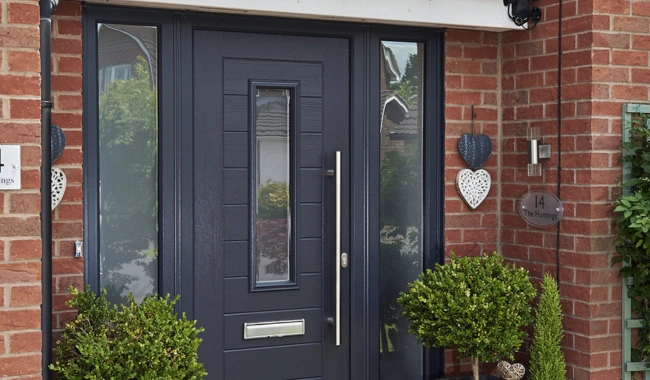
Composite front doors are engineered from multiple materials pressed together under high pressure. They typically feature a solid timber or high-density insulating foam core, an engineered internal sub-frame, and a tough glass-reinforced plastic (GRP) outer skin that replicates the textured grain of natural wood. This combination makes them strong, weather-resistant, and inherently well-insulated. When surveying properties, installers often note that composite sub-frames offer slight adaptability for older properties where brickwork apertures may have settled out of square over time.
Aluminium entrance doors, by contrast, are constructed from precision-engineered, extruded aluminium alloy profiles. Known for structural rigidity and sleek profile lines, aluminium allows for taller, wider designs and larger glazed panels without warping or flex. High-specification aluminium doors are built with advanced thermal barrier technology and corrosion-resistant powder-coated finishes, offering exceptional durability, low maintenance, and a crisp architectural appearance that excels in larger, contemporary openings.
In practical terms, composite doors generally suit homeowners seeking a warm, familiar entrance that combines traditional craftsmanship with modern efficiency. Aluminium doors, on the other hand, appeal to those wanting clean lines, minimalist sightlines, and contemporary styling.
Energy Efficiency: Aluminium vs Composite Doors
Thermal performance is one of the most critical factors when choosing an external entrance door, particularly with rising household energy costs and strict UK Building Regulations. Homeowners comparing the energy efficiency of aluminium vs composite doors need to look at how each material handles heat retention, draught proofing, and thermal bridging.
How Composite Doors Insulate
Composite doors are widely recognised for their natural thermal efficiency. The thick core—whether high-density polyurethane insulating foam or multi-layered solid timber—acts as an effective thermal barrier, minimising heat transfer between inside and out. The non-conductive GRP outer skin and multi-chambered outer frame further prevent cold spots and draughts.
Because the materials naturally resist heat flow, even standard composite doors easily achieve low U-values (the measure of heat loss, where lower numbers indicate better insulation) and keep hallways comfortable throughout winter. Under the independent BFRC door energy rating system, quality composite designs consistently score at the top of the scale for domestic heat retention and draught resistance.
How Modern Aluminium Entrance Doors Achieve Thermal Efficiency
Historically, metal doors were viewed as poor insulators because untreated aluminium naturally conducts heat and cold. Modern residential aluminium entrance doors have overcome this through sophisticated engineering:
- Polyamide thermal breaks: High-performance polyamide insulating barriers are built directly into the frame and sash profiles, physically separating the exterior and interior aluminium faces to eliminate cold bridging.
- Insulated core panels: High-density insulation fills the door sash, preventing conductive heat loss across the face of the panel.
- High-spec glazing: Where glass inserts or sidelights are incorporated, energy-efficient double or triple glazing featuring low-E coatings and warm-edge spacer bars ensures optimal retention.
- Multi-point weather seals: Durable EPDM gaskets around the perimeter prevent draughts and water ingress even during severe driving rain.
Which Offers Better Energy Efficiency?
Both door types can deliver outstanding energy ratings and comfortably surpass the Approved Document L U-value requirements under UK Building Regulations for replacement external doors.
Composite doors tend to offer high thermal efficiency as standard at a more accessible entry price. A quality composite door routinely achieves U-values between 1.0 and 1.4 W/m²K.
Thermally broken aluminium entrance doors, however, can match or even outperform composite models when specified with deep multi-chambered thermal profiles and triple-glazed units, with some premium systems achieving U-values as low as 0.8 to 1.1 W/m²K. Ultimately, energy efficiency aluminium vs composite doors comes down to specification: both keep your hallway warm, but aluminium requires specialised thermal breaks to match the natural insulation inherent in a composite core.
In real-world performance, a door’s thermal efficiency also relies heavily on installation precision. Even the most advanced door will leak heat if the outer frame is fitted out of square or perimeter weather seals fail to compress evenly against the cill. Choosing a FENSA-registered installer ensures that your entrance door is surveyed accurately, installed with airtight perimeter sealing, and fully certified to comply with current Building Regulations.
Suggested read: Why Choosing a FENSA Registered Door Supplier Like Globe Home Improvements Matters
Aesthetic Appeal: Traditional Warmth vs Contemporary Lines
Visual style is often the deciding factor for homeowners choosing between these two materials.
Composite Doors: Versatile and Characterful
Composite doors replicate the authentic grain and weight of painted timber without the associated maintenance hassles. They are exceptionally versatile and complement a wide variety of British housing styles:
- Traditional and period properties: Victorian, Edwardian, and 1930s homes benefit from classic panel arrangements, heritage ironmongery, and decorative stained or leaded glass.
- Country cottages: Farmhouse and stable door designs with tongue-and-groove detailing provide rustic charm.
- Modern developments: Clean flush designs in bold contemporary shades offer an updated look for new-build properties.
For homeowners updating a period townhouse or modern suburban property, choosing composite doors in St Albans and neighbouring towns provides hundreds of colour combinations—including dual-colour options that pair a vibrant exterior shade with a neutral interior finish. Furthermore, threshold choices can be tailored during the survey stage, from standard rebated PVC-U cills for maximum weatherproofing on wind-exposed plots to Part M-compliant low aluminium thresholds for seamless, step-free access.
Suggested read: Now Available: Comp Door SleekSkin at Globe Home Improvements
Aluminium Doors: Minimalist and Architectural
Aluminium entrance doors excel in contemporary and architectural settings where clean lines and expansive glazing take priority:
- Slimmer frames and greater glass area: The natural strength of aluminium allows for narrower profiles and wider apertures, maximising natural daylight in entrance halls.
- Modern finishes: Durable polyester powder coating provides a smooth, tactile matte, textured, or metallic finish that will not flake, crack, or peel, even when subjected to intense UV exposure.
- Grand proportions: Because aluminium has superior structural integrity, it can accommodate oversized doors and statement pivot entrances without risk of bowing in extreme weather.
For modern homes, renovations, and extensions featuring contemporary architectural glazing, aluminium entrance systems pair seamlessly with matching windows and modern aluminium bi-fold doors to create a striking first impression.
Security and Structural Strength
A front entrance must protect your home and family. Fortunately, both composite and aluminium entrance doors are among the most secure options available on the market.
Composite Door Security
A composite door’s solid construction and rigid sub-frame resist physical force and blunt impact. Paired with modern multipoint locking systems, anti-snap euro cylinders, and reinforced keeps, quality composite entrance systems offer formidable resistance against forced entry and commonly meet PAS 24 security standards and Secured by Design accreditation.
When evaluating security specifications for your entrance, checking for verified cylinder protection—such as 3-star Sold Secure diamond-rated cylinders, hardened steel deadbolts, and heavy-duty hinges anchored firmly into the structural wall—ensures your home benefits from lasting peace of mind.
Aluminium Door Security
Aluminium’s exceptional inherent strength-to-weight ratio provides immense rigidity. The profiles are difficult to bend, lever, or force, ensuring the frame and sash remain square and securely locked into the aperture. High-grade multipoint hook locks, heavy-duty hinges, and laminated security glass combine with the metal’s natural toughness to deliver exceptional physical protection.
Security is not a compromise with either material when properly specified. Crucially, technical installation expertise ensures the frame is fitted plumb and true, guaranteeing that multipoint locking hooks throw effortlessly into their keeps without requiring excessive handle force, protecting the locking gearbox and maintaining continuous weatherseal compression for years to come.
Maintenance and Long-Term Durability
Neither composite nor aluminium doors demand intensive maintenance, making both a practical alternative to traditional timber.
Caring for a Composite Door
Professional composite door installations never need sanding, varnishing, or repainting. The durable GRP skin resists scratches, knocks, and everyday family wear. Routine maintenance simply involves wiping the door with warm soapy water and lubricating the hinges and cylinder once a year. High-quality composite doors have an expected lifespan of 25 to 30 years.
Caring for an Aluminium Door
Aluminium is completely impervious to rust, rot, and moisture damage. The factory-applied powder-coated surface withstands exposure to driving rain, UV radiation, and seasonal temperature swings without fading or degrading. Like composite doors, an occasional wash with a soft cloth and mild detergent keeps the finish pristine. With proper care, an aluminium entrance door can last 35 to 45 years or more.
To safeguard your investment, door installations should always be backed by a comprehensive 10-year warranty and guarantee, alongside insurance-backed warranty protection to give homeowners absolute confidence in long-term reliability.
Are Aluminium Front Doors Better Than Composite Doors?
Homeowners often ask plainly: are aluminium front doors better than composite doors? The answer depends on which aspects of door performance, design, and budget you prioritise.
Aluminium front doors are often considered better if:
- You want an ultra-modern, minimalist aesthetic with flush finishes and sleek architectural lines.
- You require an oversized, extra-wide, or tall entrance door that requires superior structural stiffness.
- You want the longest possible lifespan and maximum resistance to warping in exposed, south-facing locations.
- You are pairing your front entrance with matching aluminium windows or bifold doors across your property.
Composite front doors are often considered better if:
- You want authentic woodgrain texture and traditional styling that complements period or suburban architecture.
- You want exceptional thermal insulation and energy efficiency at a more accessible, cost-effective price point.
- You want a wide selection of decorative glass, heritage colours, and classic door furniture styles.
- You are looking for the best balance of performance, security, and affordability.
Neither material is universally “better”; rather, each serves distinct architectural styles and budgetary expectations. In established residential neighbourhoods across Bedfordshire, such as our popular Luton composite door installations, composite front doors are frequently favoured for their balance of robust thermal performance, multi-point security, and classic aesthetic appeal. During site surveys, examining your property’s exposure to wind and sun alongside interior hall lighting will quickly clarify whether composite charm or aluminium precision is the better long-term fit.
Suggested read: Bi-Fold Doors for Summer Living: Bringing the Garden Into Your Home
Cost and Value Considerations
Budget inevitably plays an important part in your final decision.
Composite Doors: Accessible All-Round Value
Composite doors generally represent the sweet spot between affordability and high performance. They provide superior security, insulation, and durability compared to standard PVC-U doors while remaining significantly more affordable than bespoke timber or architectural aluminium. For most residential renovations, composite doors deliver outstanding return on investment.
Aluminium Doors: A Premium Architectural Investment
Aluminium entrance doors typically sit in a higher price bracket. The advanced engineering required for extruded profiles, multi-stage thermal breaks, and bespoke hardware configurations reflects a premium manufacturing process. However, their extended lifespan, structural resilience, and architectural appeal make them a worthwhile investment for high-end renovations and contemporary builds.
Suggested read: What to Look for When Choosing a New Entrance Door
Quick Comparison: Composite vs Aluminium Doors
FAQs About Composite vs Aluminium Doors
What U-value should I look for in a new front door?
Under UK Building Regulations (Approved Document L), replacement doors must achieve a maximum U-value of 1.4 W/m²K or lower. Quality composite doors easily achieve between 1.0 and 1.4 W/m²K, while high-specification thermally broken aluminium doors can achieve down to 0.8 to 1.1 W/m²K when paired with triple glazing.
Do aluminium entrance doors feel cold to the touch or create draughts?
Modern residential aluminium doors feature advanced polyamide thermal breaks separating the exterior and interior profiles, preventing cold bridging and condensation. When fitted with durable perimeter weather gaskets, they remain warm on the inside and completely draught-free.
How do composite and aluminium doors perform in direct sunlight?
Quality composite doors use UV-stabilised GRP skins and stable cores to prevent fading and distortion, while architectural aluminium uses tough powder-coated finishes that will not crack or peel under intense UV exposure. For south-facing entrances exposed to strong midday sun, thermally broken aluminium or lighter composite finishes help minimise surface heat absorption.
Can composite and aluminium doors be fitted with a low threshold?
Yes. Both systems can be specified with Part M-compliant low aluminium thresholds (approximately 15mm high), creating an accessible, step-free entrance for prams and wheelchairs without compromising weather performance.
Which door provides better acoustic and noise insulation?
Both materials offer high acoustic dampening. The dense, solid timber or polyurethane core of a composite door naturally absorbs street noise, while aluminium doors fitted with multi-chambered profiles and acoustic laminated glazing provide superb sound reduction for homes near busy roads.
How often do composite and aluminium doors need maintenance?
Neither requires repainting, staining, or sanding. A simple wipe with warm soapy water every few months to remove dirt, paired with a light annual spray of lubricant on the multipoint locking hooks and hinges, is all that is needed to ensure decades of smooth operation.
Speak to Us About the Right Door for Your Home
If you are comparing composite vs aluminium doors and want professional guidance tailored to your property, our team is here to help. As a family-run company founded in 2004, we believe in a transparent, consultative approach—taking the time to understand your home’s layout, aesthetic goals, and thermal requirements without pushy sales pressure.
From our regional base and showroom in Clophill serving Bedfordshire, Buckinghamshire, Hertfordshire, and bespoke composite doors in Milton Keynes, our experienced fitting teams guide you from the initial survey through to precision installation backed by a 10-year warranty and guarantee.
Call our head office on 01525 304060 or mobile on 07771 960333, message us on WhatsApp, or email info@globehomeimprovements.co.uk to speak directly to our door specialists and request a quote.